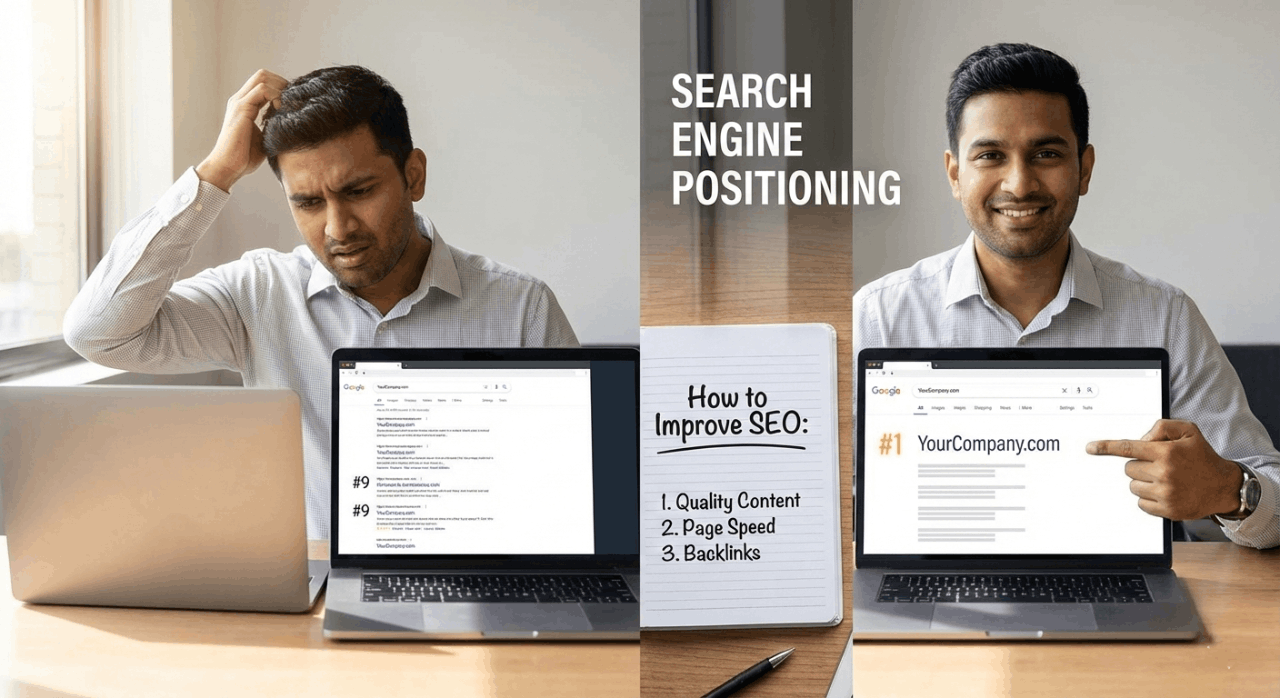
When someone searches for your business, your product, or a problem you solve, where does your website appear? That placement, that specific position in the search results, defines whether potential customers find you or scroll past to a competitor. This is what search engine positioning seo is really about. It’s not just getting indexed by Google. It’s about earning a spot high enough that people actually see you, click through, and take action.
Many businesses invest in content, update their websites regularly, and follow basic SEO advice, yet their rankings remain stagnant or slowly decline. They wonder why competitors with less content or smaller teams consistently outrank them. The frustration is understandable. Search engine positioning isn’t just about doing SEO tasks. It’s about understanding how Google evaluates relevance, authority, and user satisfaction across thousands of ranking signals. The challenge isn’t that businesses don’t try. It’s that they often focus on outdated tactics or surface level optimization while missing the deeper factors that actually influence where a page lands in search results. Getting this right requires a shift in perspective, one that prioritizes how search engines assess quality and intent over simply chasing keywords or backlinks.
What Search Engine Positioning SEO Really Means
At its core, search engine positioning seo refers to the strategic process of improving where your web pages appear in organic search results for specific queries. It’s the practice of optimizing your site so that when someone types a relevant keyword into Google, Bing, or another search engine, your page shows up on the first page, ideally in the top three positions. This isn’t accidental. It’s the result of deliberate choices around content quality, technical performance, site structure, and how well your page satisfies what the searcher actually wants.
The term itself can sound technical, but the concept is straightforward. Every time a search engine crawls your site, it’s evaluating hundreds of factors to decide whether your page deserves to rank, and if so, where. That decision affects visibility, traffic, and ultimately revenue. A page ranking in position one gets significantly more clicks than one in position five, even if both appear on the first page. Understanding search engine positioning seo in simple words means recognizing that your goal isn’t just to be found, it’s to be found first, or at least ahead of competitors who are targeting the same audience.
The search engine positioning seo definition goes beyond just keywords. It includes on page elements like title tags and meta descriptions, technical factors like page speed and mobile usability, off page signals like backlinks and brand mentions, and user behavior metrics like click through rates and dwell time. All of these work together to tell Google whether your page is the best answer for a given query.

Why Search Engine Positioning SEO Matters More Than Ever
Businesses often underestimate how much their position in search results impacts their bottom line. A study of click through rates consistently shows that the first three organic results capture the majority of clicks. Drop to the second page, and traffic becomes almost negligible. This makes search engine positioning one of the highest leverage activities in digital marketing. Strong rankings compound over time, driving consistent organic traffic without the ongoing costs of paid ads.
Beyond traffic, there’s a trust factor. Users tend to associate higher rankings with credibility and authority. If your business consistently appears at the top for industry related queries, it builds brand recognition even among people who don’t click immediately. They see your name repeatedly, and that familiarity translates into trust. This is why search engine positioning seo is important, not just for immediate clicks but for long term brand equity.
Another reason why is search engine positioning seo important centers on competitive advantage. In most industries, the gap between ranking on page one versus page two is the difference between growth and invisibility. Competitors who understand modern SEO tactics, who invest in content depth and user experience, gradually pull ahead. Meanwhile, businesses relying on outdated strategies or neglecting technical issues lose ground. The question isn’t whether to prioritize search engine positioning. It’s whether you can afford not to.
How Google Evaluates and Assigns Position
Google doesn’t reveal the exact weight of every ranking factor, but years of testing and observation have clarified what matters most. Relevance is foundational. Your content must align with the searcher’s intent, whether that’s informational, navigational, commercial, or transactional. A well optimized page answers the query better than alternatives. It uses the right keywords naturally, addresses related questions, and provides depth without unnecessary fluff.
Authority comes next. Google assesses whether your site and the specific page are trustworthy sources on the topic. This involves backlinks from reputable sites, consistent publishing history, expertise signals like author credentials, and how other authoritative sites reference your content. A single strong backlink from a trusted industry publication can shift your position more than dozens of low quality links. This is where many businesses struggle. Building real authority takes time and genuine value creation, not shortcuts.
User experience has become a critical ranking factor, especially since the introduction of Core Web Vitals. Pages that load quickly, display correctly on mobile devices, and don’t shift content unexpectedly rank better than slower, clunkier alternatives. Beyond technical performance, Google evaluates how users interact with your page. If people click your result and immediately return to search for another option, that signals poor relevance. If they stay, scroll, and engage, it reinforces that your page met their needs. This feedback loop directly influences search engine position over time.

Search Engine Positioning SEO Strategies That Work
Effective strategies start with thorough keyword research, but not the kind that focuses solely on search volume. You need to understand what people actually mean when they type specific phrases. A query like “best CRM software” signals comparison intent, while “how to set up CRM workflows” indicates a learning phase. Positioning your content to match that intent, not just to include the keyword, separates strong SEO from wasted effort.
On page optimization remains essential. Your title tag should clearly convey what the page offers while including your primary keyword naturally. Meta descriptions, though not direct ranking factors, influence click through rates, which do matter. Headings should structure your content logically, making it easy for both users and search engines to understand the hierarchy of information. Internal linking connects related pages, distributing authority across your site and helping Google discover and index content more effectively.
Content depth has become increasingly important. Thin pages that barely scratch the surface of a topic rarely rank well in competitive spaces. Google favors comprehensive resources that cover a subject thoroughly, answer common questions, and anticipate follow up queries. This doesn’t mean writing longer just for the sake of word count. It means genuinely addressing the topic with enough detail that users don’t need to visit another site for more information. This approach aligns with what is search engine positioning seo at its best, meeting user needs completely.
Technical SEO ensures that search engines can crawl, index, and understand your site without obstacles. This includes optimizing site speed, fixing broken links, creating a clean URL structure, implementing structured data markup, and ensuring mobile responsiveness. Many businesses overlook technical issues until they notice rankings drop. Proactive technical audits prevent that decline and create a stable foundation for all other SEO efforts.
The Role of Backlinks and Authority Signals
Backlinks remain one of the strongest indicators of authority. When reputable sites link to your content, it signals to Google that your page provides value worth referencing. Not all backlinks carry equal weight. A link from a high authority domain in your industry matters significantly more than dozens of links from low quality directories or irrelevant sites. Building backlinks requires creating content that naturally attracts links, outreach to relevant publications, guest contributions, and relationship building within your industry.
Brand mentions, even without links, contribute to authority. When your business name appears frequently across trusted sources, Google interprets this as a signal of relevance and trustworthiness. This reinforces your overall domain authority, which influences how well individual pages rank. Businesses with strong brand recognition often find it easier to rank new content because Google already views their domain as authoritative.
Another aspect involves earning featured snippets and other SERP features. These positions, often called position zero, appear above traditional organic results and capture significant attention. Structuring content to directly answer common questions, using clear formatting, and providing concise summaries increases your chances of securing these placements. While not technically a higher ranking in the traditional sense, featured snippets dramatically improve visibility and click through rates.
Understanding Search Engine Positioning and SEO in Practice
Consider a practical search engine positioning seo example. A software company wants to rank for “project management tools for remote teams.” They create a comprehensive guide comparing different tools, explaining key features, addressing common pain points, and including real user scenarios. The page loads quickly, includes internal links to related resources, and earns backlinks from project management blogs and productivity sites. Over time, this page climbs from position fifteen to position three. That shift represents a massive increase in organic traffic and qualified leads.
Another search engine positioning seo examples involves a local business targeting “emergency plumbing services in Austin.” They optimize their Google Business Profile, create location specific content addressing common plumbing issues in the area, gather customer reviews, and ensure their site is mobile friendly with clear calls to action. Local SEO factors, like proximity and relevance to the search query, combine with on page and technical optimization to improve their visibility in local search results. Their position in the map pack and organic results directly correlates with call volume and service requests.
These examples highlight that search engine positioning seo isn’t a single tactic. It’s a coordinated approach addressing multiple ranking factors simultaneously. The businesses that succeed understand how these elements interact and prioritize improvements that deliver the most impact for their specific situation and competition level.

Tools and Tracking for Search Engine Position
Monitoring where your pages rank for target keywords requires reliable tools. Google Search Console provides direct insights into which queries drive impressions and clicks, what your average position is, and how that changes over time. This free tool should be the starting point for any SEO effort. It reveals technical issues, indexing problems, and mobile usability errors that could harm your rankings.
Third party platforms like SEMrush, Ahrefs, and Moz offer more granular tracking of seo search engine position across multiple keywords and competitors. These seo tools search engine keyword position capabilities include historical data, SERP feature tracking, and competitor analysis. Seeing where competitors rank for the same keywords helps identify content gaps and opportunities. If a competitor consistently outranks you, analyzing their backlink profile, content depth, and on page optimization reveals what might be working for them.
For businesses evaluating enterprise search engine positioning seo providers, the key is finding partners who prioritize transparency and results over vanity metrics. Enterprise solutions often include advanced reporting, dedicated strategy sessions, and integration with marketing platforms. The best providers don’t just report rankings. They connect position changes to traffic, conversions, and revenue, demonstrating the actual business impact of improved search engine positioning.
Common Mistakes That Hurt Rankings
Keyword stuffing remains surprisingly common. Businesses think repeating their target keyword excessively will boost rankings, but Google’s algorithms have long since evolved past this. Overuse creates awkward, unnatural content that users dislike and that search engines penalize. Focus instead on using keywords naturally where they fit contextually, and build content around topics rather than single phrases.
Neglecting mobile optimization is another critical error. With mobile searches surpassing desktop, a site that doesn’t perform well on smaller screens loses rankings and traffic. Google uses mobile first indexing, meaning it evaluates the mobile version of your site to determine rankings. If the mobile experience is poor, your search engine positioning suffers regardless of how well your desktop site performs.
Ignoring user intent leads to mismatched content. A page optimized for “buy running shoes” shouldn’t be an informational blog post about running techniques. It should be a product page with clear purchasing options. When your content doesn’t match what users expect based on their query, bounce rates increase and rankings drop. Understanding the nuances of search intent and aligning your content strategy accordingly is fundamental to effective search engine positioning seo.
Is Search Engine Positioning SEO Work in 2026
The short answer is absolutely. Google continues refining its algorithms, but the core principles remain consistent. Quality content, technical excellence, authoritative backlinks, and strong user experience drive rankings. What has changed is the sophistication of Google’s evaluation. The search engine better understands context, synonyms, and natural language. It rewards depth and expertise while penalizing thin, manipulative content.
AI generated content has sparked debates about whether traditional SEO still matters. The reality is that helpful, well researched content written by humans or assisted by AI performs well when it genuinely serves user needs. Google doesn’t penalize AI content specifically. It penalizes low quality content, regardless of how it’s created. This means businesses must focus on creating resources that provide real value, whether that involves human writers, AI tools, or a combination.
The competitive landscape has intensified. More businesses understand SEO basics, which means the gap between average and excellent execution matters more. Investing in search engine positioning seo remains one of the most cost effective ways to drive long term growth, but it requires consistent effort, adaptation to algorithm updates, and a commitment to quality over quick wins.
Building Long Term Position and Visibility
Strong search engine positioning isn’t achieved overnight. It’s built through consistent publishing of valuable content, ongoing technical maintenance, strategic link building, and continuous improvement based on performance data. Businesses that treat SEO as a long term investment rather than a one time project see compounding returns. Each piece of optimized content, each earned backlink, and each improvement to user experience contributes to overall domain authority and ranking potential.
Adaptation matters. Google updates its algorithms regularly, sometimes with major shifts that affect rankings across entire industries. Staying informed about these changes and adjusting your strategy ensures your site doesn’t lose ground. This doesn’t mean chasing every minor update or overreacting to ranking fluctuations. It means maintaining a foundation built on quality and user focus, which remains resilient through algorithm changes.
The businesses that consistently rank well share common traits. They prioritize user experience, invest in comprehensive content, build genuine authority through relationships and quality, and maintain technical excellence. They understand that search engine positioning seo is both strategic and operational, requiring leadership vision and detailed execution. When approached with this level of commitment, the results speak for themselves through sustained visibility, growing organic traffic, and competitive advantages that compound over time.